
A Night at the Amuseum

We had another great Tuesday night at Amuseum Naturalis. Each Tuesday flies by so fast, but this week we took a few photos to capture the vibe of the museum. It’s great to see people interacting with the exhibits and talking to each other about them. There are many touchable things and no signs saying Do Not Touch, but so far most things have remained essentially intact even after thousands of visitors—miracle!

If you’re in the area, be sure to come by one of the next two Tuesdays!
This slideshow requires JavaScript.

Discover What’s New!

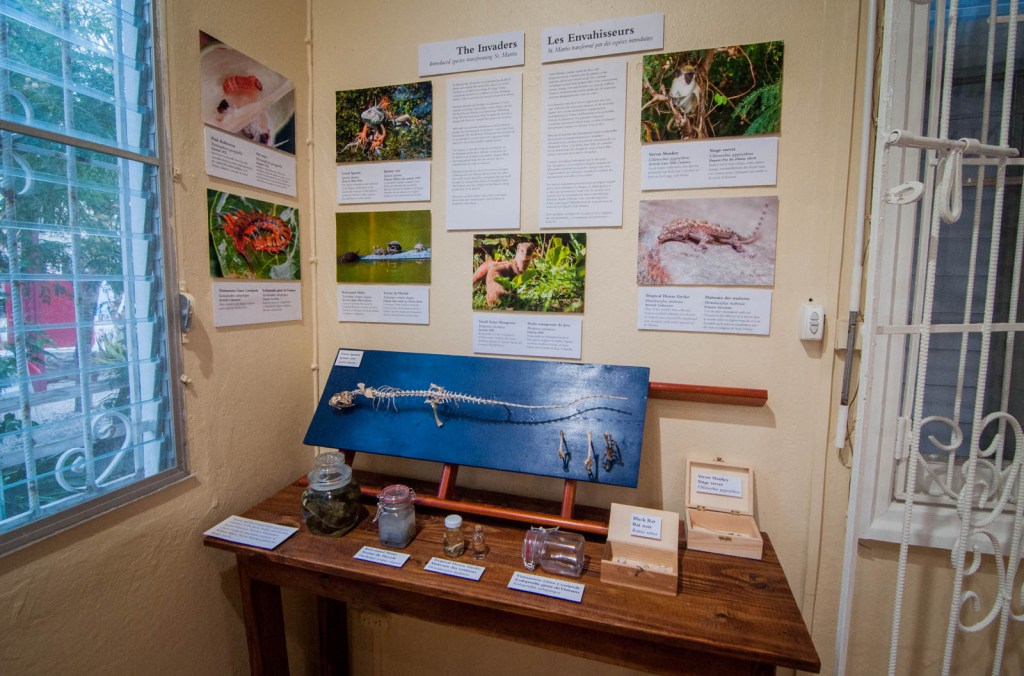
The Invaders, an exhibit about introduced species, is one of the latest additions to the museum.

Island residents and visitors are invited to discover the wild side of St. Martin at Amuseum Naturalis, a free pop-up natural history museum in Grand Case. The museum is open on Tuesday evenings from 6-10pm during the Mardis de Grand Case street fair.

“Amuseum Naturalis is a museum about life, which is always changing–just like the museum,” explained co-curator Mark Yokoyama. “Since we launched in January, we’ve doubled the number of exhibits and created four short nature documentaries that play in the museum’s theater. There are new wonders every week.”

The museum’s current special exhibit, Women, People of Color and the Making of Natural History in the Caribbean, has been expanded for March, Women’s History Month. The stories of five fascinating but historically overlooked figures have been added, including Catalina de Ayahibex, a 16th century Taino tribal leader who was an expert in native plants, and Charlotte Dugée, an 18th century free woman of color and skilled botanic artist from Saint Domingue who disappeared into the South American jungle during a scientific expedition.

Four short films produced by Les Fruits de Mer about Caribbean wildlife, from cave-dwelling bats to deep-sea creatures, are now playing at the Amuseum Naturalis theater.

“These pioneers in Caribbean science are not widely known–their contributions have often been hidden, or even had the credit for them stolen–but their stories are absolutely amazing,” said Jenn Yerkes, creator of the exhibit. “They reveal so much about both the history of science and the political and cultural climate of the different eras. Plus, many of these trailblazers risked perilous journeys, pirates, shipwreck, disease, venomous creatures and dangerous wildernesses to do what they loved–their lives were like real-life adventure movies!”

Amuseum Naturalis curator Jenn Yerkes discusses the current special exhibit with museum guests.

The public is invited to visit Amuseum Naturalis and explore the exhibits Tuesday evening from 6-10pm. Amuseum Naturalis is located at 96 Boulevard de Grand Case, and was created by the non-profit association Les Fruits de Mer and sponsored by Delta Petroleum.

New for Tuesday

As always, we’re working on new stuff for the Amuseum. This Tuesday, we’re relaunching the photo essay Shadow of a Drought, featuring a new exhibit on the endemic species that are found only on St. Martin and launching the world premiere of our new film 2000 Feet Under the Sea.

This slideshow requires JavaScript.

The Invaders Launched

We are excited to launch a new exhibit telling one of the most interesting stories we know about wildlife on St. Martin: the animals that arrived on St. Martin with the human help and have transformed both the ecology and history of the island and continue to do so. The invaders have exterminated native species, spread disease and even helped cause the collapse of at least one agricultural industry.

This slideshow requires JavaScript.

Special Exhibit Launching Tuesday

This duck species was named by 19th century mixed-race Jamaican naturalist Richard Hill.

Island residents and tourists of all ages are invited to the free grand opening of the exhibit Women, People of Color, and the Making of Natural History in the Caribbean, on Tuesday, February 9 from 6-10pm at Amuseum Naturalis in Grand Case.

The exhibit is a special series at Amuseum Naturalis, created to shine a light on the contributions of women and people of color in the study of natural history in the Caribbean, from the 1600s to the early 1900s. The exhibit brings their discoveries, explorations and stories to life with vivid biographical snapshots and reproductions of beautiful historical zoological and botanical illustrations, engravings, portraits and maps.

The exhibit spotlights women like groundbreaking naturalist Maria Sibylla Merian, who led her own scientific expedition to Suriname in 1699.

“The historical contributions of women and people of color to science have often been hidden, suppressed, or simply not as well publicized as those of their white male contemporaries, and this is just as true in the Caribbean as elsewhere,” explains Jenn Yerkes, Amuseum Naturalis co-curator and Les Fruits de Mer President. “We wanted to create an opportunity for people to discover the fascinating stories of these incredible women and men who helped to build the scientific heritage of the Caribbean.”

The free, public exhibit will launch Tuesday night with the first installation of the series, which will include captivating figures such as naturalist and scientific artist Maria Sibylla Merian (1647 – 1717), known for her expedition to Suriname to document Caribbean insects, reptiles, birds, and plants; Graman Quassi (ca. 1690 – ca. 1780), a renowned Surinamese healer and botanist of African descent; Richard Hill (1795-1872), a trailblazing mixed-race naturalist and anti-slavery activist from Jamaica; and Felipe Poey (1799-1891), a Cuban zoologist known for his pioneering study of Caribbean marine life. The upcoming installations will be added throughout the run of the exhibit, so there will be new additions for visitors to enjoy every week. The exhibit will coincide with Black History Month and run through International Women’s Day, March 8, 2016.

The exhibit's launch will include the 19th century mixed-race Jamaican naturalist and abolitionist Richard Hill.
The exhibit’s launch will include the 19th century mixed-race Jamaican naturalist and abolitionist Richard Hill.

Women, People of Color, and the Making of Natural History in the Caribbean will be on display in the special exhibit hall of Amuseum Naturalis, Les Fruits de Mer’s free pop-up museum of natural history located at 96 Boulevard de Grand Case. Amuseum Naturalis is open to the public on Tuesdays during the Mardis de Grand Case street fair, and is sponsored by Delta Petroleum.

World Wetlands Day

Thanks to everyone who came by for World Wetlands Day! It was great to be able to share some of the most fascinating facets of St. Martin’s wetlands with hundreds of locals and visitors. We feel very lucky to have a space where the local community can participate in international events like this. Here are a few photos from last night.

This slideshow requires JavaScript.

Focus on Wetlands

The Commander, a freshwater crayfish, grooms his large claw in preparation for Tuesday’s festivities.

Amuseum Naturalis will be highlighting wetland-related exhibits and films for World Wetlands Day on Tuesday, February 2, from 6-10pm. The museum is located at 96 Boulevard de Grand Case and admission is free.

In the main exhibition hall, visitors can immerse themselves in St. Martin’s fascinating freshwater ecosystems at the Gut Life exhibit. Live freshwater critters—from snails and insects to fish and crayfish—are on display. A companion film, also titled Gut Life, will be showing in the free Amuseum Naturalis theater in English and French.

The photo essay Shadow of a Drought, featured in the museum’s special exhibit space, showcases the impact of drought on St. Martin’s wetlands. The exhibit has been extended for a week in honor of World Wetlands Day.

“Wetlands are critical to the well-being of both humans and a huge variety of native plants and animals and we are excited to participate in a worldwide celebration of wetlands,” commented Les Fruits de Mer co-founder Mark Yokoyama. “Hosting an event at Amuseum Naturalis during the Mardis de Grand Case street fair is the perfect opportunity to share St. Martin’s important wetland environments with both tourists and locals.”

“The Commander is ready,” added Les Fruits de Mer President Jenn Yerkes, referring to the freshwater crayfish residing in the Gut Life exhibit. “As the top predator in both his aquarium and in local freshwater habitats, he is prepared to be an excellent ambassador for the wetlands at this special event.”

February 2nd of each year is World Wetlands Day. This day marks the date of the adoption of the Convention on Wetlands on February 2, 1971, in the Iranian city of Ramsar on the shores of the Caspian Sea.

Friend or Foe?

What we hoped would be a new friend for our aquarium buddies seems to have struck a nerve with The Commander. Is the river goby a threat to his dominance in the tank? An attempted claw-pinch indicates that he thinks so at the very least. Will everyone still be there in the morning? Stay tuned to find out!

This slideshow requires JavaScript.

Scrub Island Rescue

World premiere January 26th at Amuseum Naturalis.

The world premiere of the new Les Fruits de Mer movie, Scrub Island Rescue, will take place tomorrow. Learn a little bit about this rarely-visited island and find out who—or what—was rescued at the Amuseum Naturalis theater tomorrow evening. Check out the trailer below and visit us tomorrow for Mardi de Grand Case.

TV Debut for the Big C

The Commander. On television.

We are excited to announce that the apex predator and exhibit cornerstone known everywhere as The Commander made his TV debut on Guadeloupe 1ère this week during a news feature about Amuseum Naturalis. Many other, less interesting, things were also featured, such as exhibits that don’t feature The Commander.